How Cycling Isn’t Just Carbon Bikes and Lycra
Somewhere between the shimmering peloton photos and the wind-tunnel-tested carbon frames, we’ve let a small but crucial truth about cycling slip away: most people on bikes aren’t racers. They’re not wearing aero helmets or checking their power output on a Garmin. They’re simply getting from A to B. They’re dropping their kids off, grabbing groceries, or getting some fresh air after work.
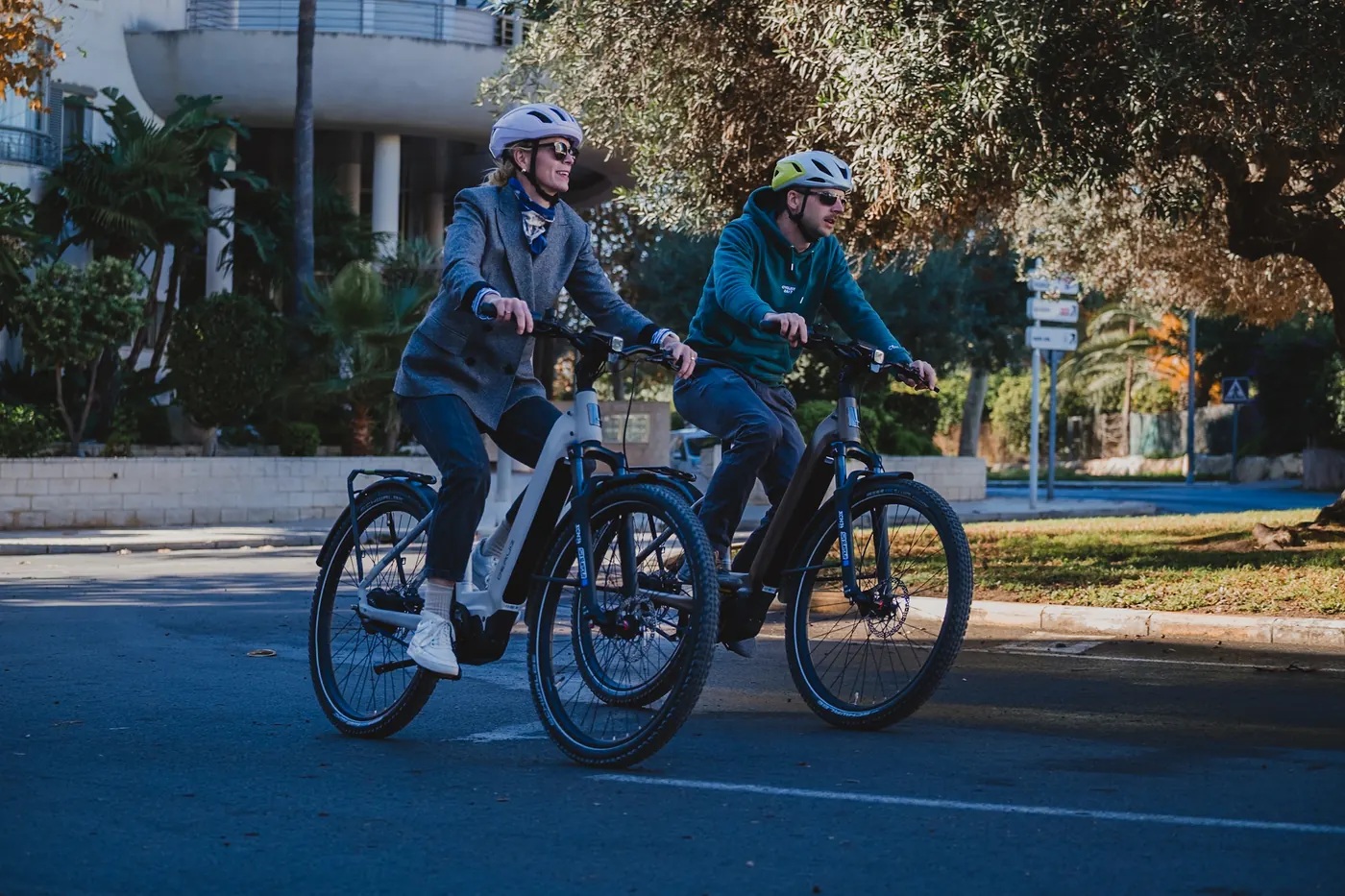
Yet, scroll through almost any major cycling brand’s feed (my brand included btw at first glance), and it looks more like a glossy sportswear catalog than a reflection of real-world riding. Everything is performance-driven sleek frames, lightweight wheels, aero gains. It’s aspirational marketing, sure, but it leaves a lot of riders out of the picture.
The Everyday Cyclist
Take a morning in any European city: the quiet whir of chain guards, panniers loaded with laptops or vegetables, rain jackets instead of race jerseys. These are riders who use bikes not as an expression of performance but as a way of living. Their bikes might weigh 15 kilograms and feature mudguards, baskets, and lights—exactly the things performance marketing has made uncool.
That’s the disconnect. Cycling culture in the mainstream industry lens often forgets the everyday person the commuter, the parent towing a trailer, the student on an old steel frame. These riders outnumber the carbon-crowd by a wide margin, but you wouldn’t know it by looking at how products are sold or how cycling is discussed online.
The Industry’s Split Personality
Cycling as an industry has long had two distinct faces. On one side sits the performance world, polished and competitive, with brands locked in a race for lighter, stiffer, faster. On the other side are the utilitarian and lifestyle riders those who ride for function, joy, or sustainability rather than data-driven gains.
The odd part is how little these worlds talk to each other. The performance side gets the spotlight, the advertising budget, and the technological glamour. Meanwhile, the everyday side sits in the shadows, often dismissed as “entry-level” or niche. Yet it’s these so-called “casual” riders who make up the broad base of cycling participation.
That imbalance creates a cultural problem: it sends the message that cycling is something to “graduate into” rather than something everyone already belongs to. When the mainstream narrative revolves around €10,000 bikes and elite fitness levels, it alienates the very audience that could sustain cycling’s growth long-term.
Cycling Isn’t a Uniform
What people wear on a bike says a lot about how they see cycling. For some, it’s Lycra the functional armour of speed. For others, it’s jeans and a jacket. Yet the industry often treats one as legitimate and the other as invisible.
There’s nothing wrong with Lycra it’s brilliant at what it’s meant for but it’s not a membership badge. The idea that you must dress a certain way to be “a real cyclist” quietly pushes many people away. It creates an unnecessary divide between those who cycle for fitness and those who simply live by bike.
Somewhere in the middle, there’s a huge opportunity for cycling culture to evolve: to celebrate diversity in how, why, and where people ride. Not everyone wants to sweat through a club ride. Some just want to ride to dinner without feeling like they’re entering a race.
The Marketing Tunnel
For decades, big cycling brands have leaned on legacy imagery racing heritage, podium finishes, performance statistics. It’s a proven formula, but it’s increasingly out of sync with where the future of cycling lies. That’s rich coming from The guy who loves racing and performance statistics. But as more cities invest in bike lanes and as e-bikes reshape commuting, the everyday market is becoming both massive and diverse.
Yet brand storytelling hasn’t caught up. Instead of seeing bike commuters or cargo riders in ads, we still see lean, Lycra-clad silhouettes slicing through mountain passes. It’s beautiful, but it’s not the full story.
What’s missing is authenticity. The kind that shows city riders with panniers, retirees rediscovering cycling through e-bikes, or families loading bikes onto trains for a weekend escape. Telling those stories doesn’t dilute the sport; it enriches it.
E-Bikes and the New Majority
E-bikes might be the best argument yet for breaking cycling’s narrow self-image. They’ve turned what used to be an athletic pursuit into a practical tool for nearly everyone. Suddenly, hills aren’t obstacles, distance isn’t daunting, and age isn’t a limitation.
This shift has invited new demographics into cycling people who would never have considered riding before. But even here, marketing often splits the community. You see performance e-bikes advertised for “serious riders” and, elsewhere, clunky city models barely promoted beyond utility. The middle ground, the stylish, everyday, empowering side is still underserved.
That’s where the real potential lies: in normalizing cycling not as a sport but as a default mode of movement.
What If We Redefined “Cyclist”?
Imagine if the word “cyclist” didn’t instantly evoke Lycra and training rides, but instead someone on two wheels any wheels moving through their day. In Denmark or the Netherlands, that idea isn’t radical; it’s standard. You can be a lawyer in a suit or a kid in sneakers, and both are cyclists without question.
The English speaking cycling world, though, still wrestles with identity. It’s become so bound up with sport that many feel they don’t “qualify.” And yet, the future of cycling environmentally, socially, even economically depends on that inclusivity.
Rebranding cycling around access and enjoyment rather than performance wouldn’t kill racing culture; it would contextualise it. The Tour de France would still captivate millions, but so would the morning commute done by bike. Both would matter, because both are cycling.
Change from the Ground Up
Some smaller brands and community projects are already reimagining this. Independent makers of casual cycling wear, e-bike startup collectives, and advocacy groups have begun telling the stories the big players overlook. Grassroots initiatives show the human side of cycling people who ride in all weather, people whose bikes are more practical than pretty.
This bottom-up storytelling might end up doing what the big campaigns couldn’t: make riding feel universal again. Because cycling doesn’t have to be aspirational to be meaningful. It already is.
The Bigger Picture
When we widen the lens on cycling, we unlock its real power. Not just for sport, but for cities, health, climate, and community. Every person on a bike whether it’s a carbon road racer or an old city bike contributes to that.
If the industry can learn to see them all as part of one shared culture, not separate tribes, cycling will finally start to look like the inclusive, transformative force it’s always been. Because it isn’t just carbon bikes and Lycra. It’s all of us, in motion.