I’m joining stride.is in January
It was a no brainer, watch out trainingpeaks. I’m joining Stride as Head of Marketing and Growth, and it feels a bit like rolling onto a new road you’ve secretly been training for all year without quite realising it. The work, the riding, the writing, it has all been nudging in this direction for a while.

The road to Stride
Most of this year has been spent obsessing over the same question from different angles: how do you train seriously without letting training take over your entire life? The essays on stacked weeks, tired-legs intervals, and trying to chase form at 36 all circled that tension between ambition and real‑world constraints.
Stride sits right in that space. It’s a next‑generation cycling and endurance training platform built to help athletes train smarter, manage fatigue and load, and actually understand what their data is trying to tell them. It pulls in your rides and runs, syncs with your devices, and turns the chaos of power numbers, heart rate and life admin into something that looks and feels like a clear plan.
Training made by pros, built for real life
What first grabbed attention about Stride was how “serious” the engine under the hood is, without the product ever feeling exclusive or elitist. You’ve got world‑tour‑level analysis, structured plans built by top coaches, and race‑ready insight, but the interface feels like something a time‑crunched amateur can actually live with.
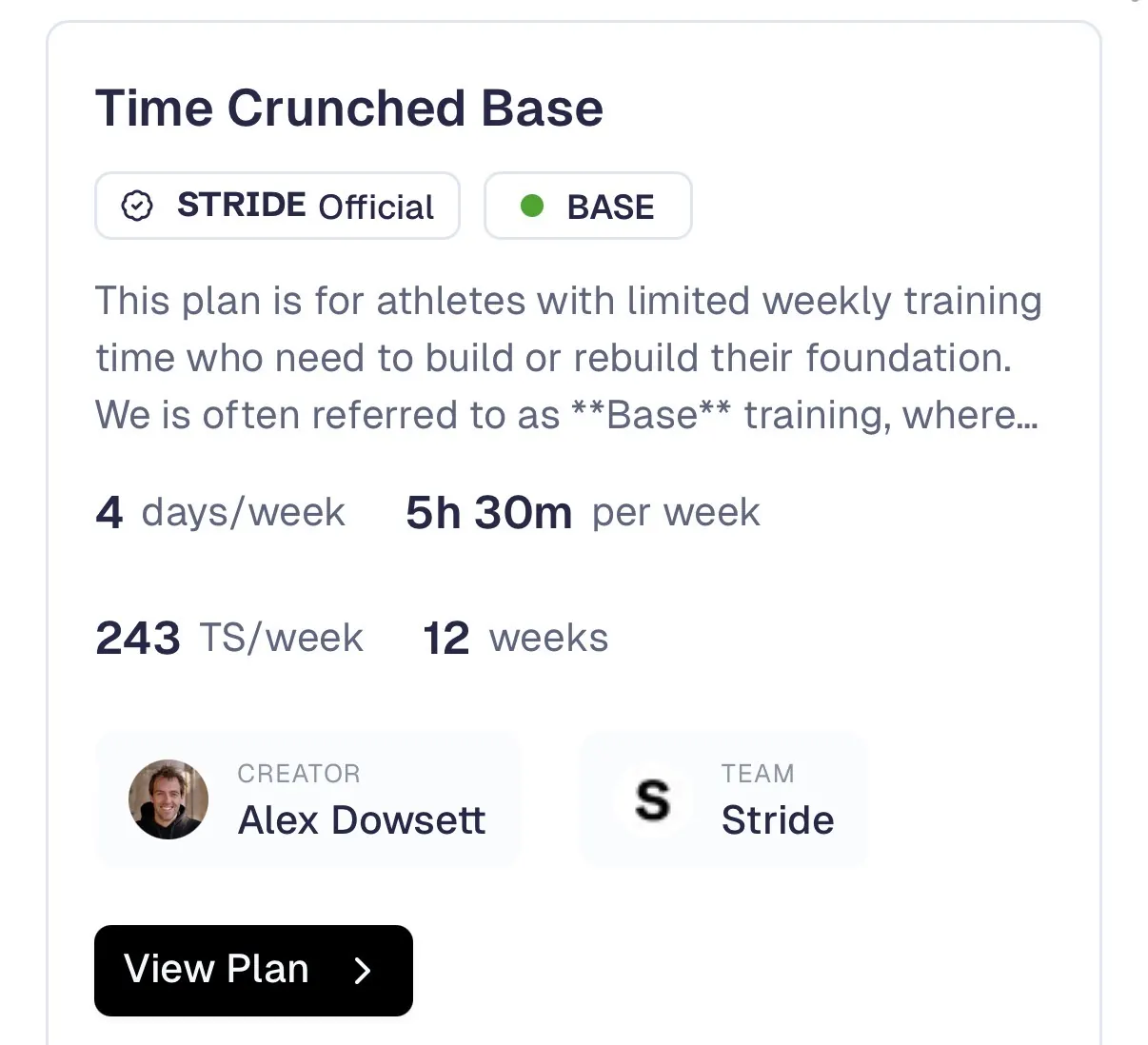
In practice, that means things like adaptive plans that adjust when life gets in the way, intelligent fatigue and load tracking, clear visualisations of progress, and race‑focused tools that help you understand where you are compared to where you want to be. It’s the difference between “here’s another generic plan” and “here’s a training rhythm that actually makes sense around your job, your family, and your headspace.”
How this connects to the writing
The pieces written this year about chasing late‑career goals, experimenting with nutrition and recovery, and trying to tidy up messy training weeks were all small attempts to make sense of performance from the inside out. Every ride note, every reflection, every slightly overlong post was basically asking for tools that don’t just track effort, but help you understand it and build on it.
Stride feels like the product version of that curiosity. It treats the athlete as a whole person – someone with ambitions, limits, stress, weather, commutes, and the occasional complete blow‑up week – and then uses data, coaching insight and smart software to support that reality rather than fight it. That alignment between lived experience on the bike and what Stride is building is the real reason this move feels so natural.
What excites me about this next chapter
The fun part in all of this is the chance to help shape how training feels for people who care deeply about their riding but don’t live like full‑time pros. Stride is aiming to be the place where world‑tour‑level analysis meets everyday‑athlete reality: smart enough for the coach or racer, simple enough for the rider squeezing intervals between school runs and late‑night emails.
There’s a big opportunity to tell better stories around training – ones that celebrate consistency over punishment, clarity over complexity, and progress over perfection. Joining Stride is a way to pour all of that riding, writing and slightly obsessive training brain into something bigger than a single blog post or ride file, and that’s a project worth getting properly excited about.