Inside the Group Ride: Unspoken Hierarchies and the Politics of Pacing
There is a pattern to every group ride. It begins long before the first pedal stroke, in a subtle choreography of glances, greetings, and positioning that sets the tone for what is coming. The group ride might look like a democratic ritual of shared passion, but beneath the whirr of freehubs and the hum of tires sits something more complex: a miniature version of the cycling world, complete with unspoken hierarchies, quiet negotiations, and the occasional act of rebellion. Yeah I am talking to you, the person who surges on the chain gang to great a gap.... Group riding is one of the great joys of cycling because drafting, shared effort, and camaraderie let us go faster and farther together than they would alone.
Every cyclist who has rolled up to a Saturday spin recognises this feeling. The moment you arrive, you are reading the peloton. Someone is stretching with quiet confidence, someone else is overpacked with gels and ambition, The one who wore to many layers and questions it and another rider is fiddling with a power meter like a pro checking their form on race morning. It is a social current disguised as sport. Nobody says it outright, but everyone seems to know who is likely to pull and who will sit in until the coffee stop, surfing shelter like it is a separate discipline.
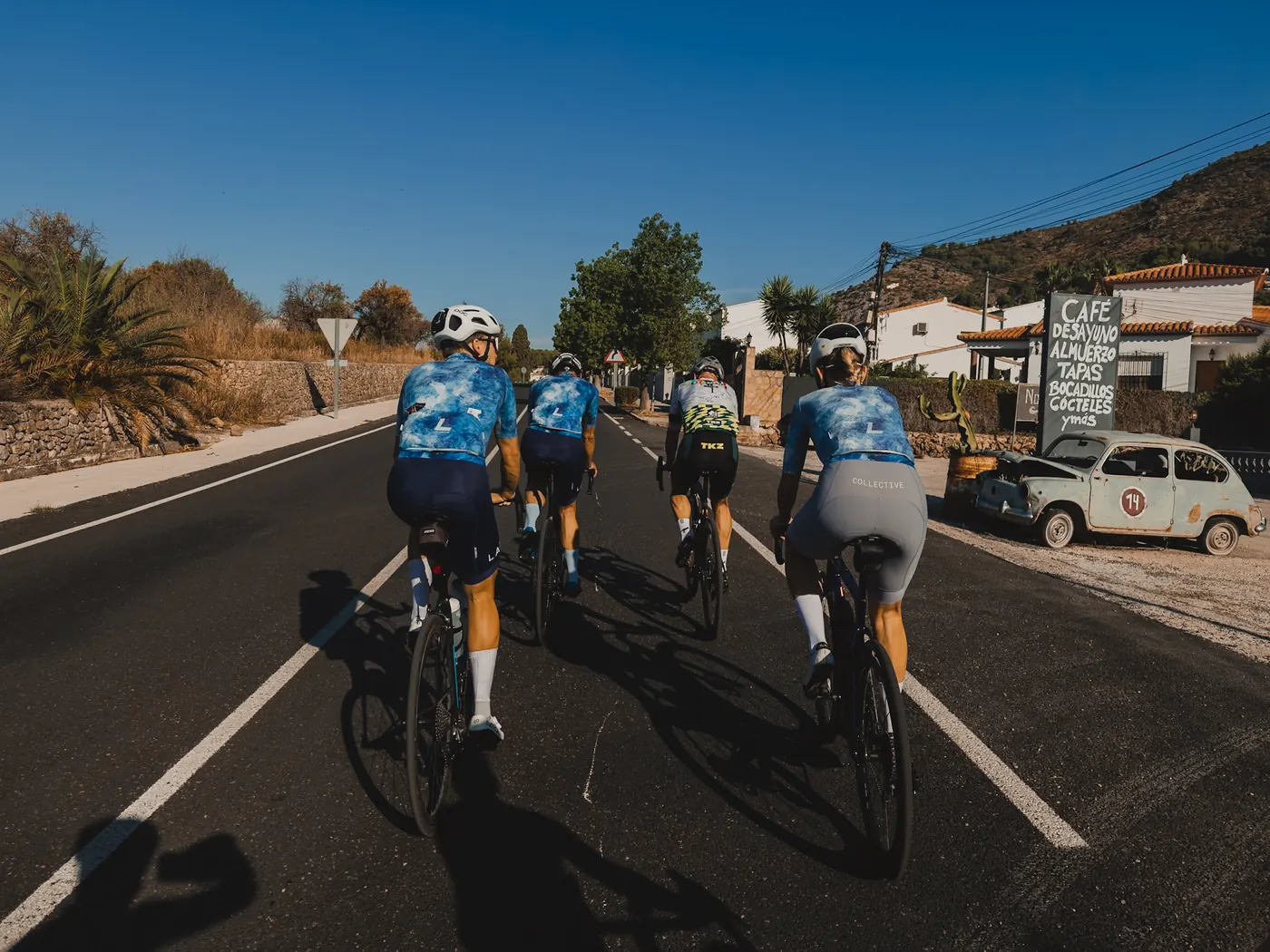
Group rides fascinate people for exactly this reason. They are not races on paper, yet they carry a low, constant tension that feels suspiciously like one. For every rider claiming to be “taking it easy today,” there is another one secretly planning to test legs on the first climb or in the crosswind section. For every casual nod to camaraderie, there is an invisible game of status measured not by podiums but by who dictates tempo, who can hold the wheel, and who can make others suffer while laughing and that brings me on to.
The Invisible Rulebook
No one hands out a manual for how to behave in a bunch, yet the same patterns appear everywhere. Strong riders gravitate to the front early and set a tone of control and courtesy, while everyone else slips into familiar roles. The pullers, the pacers, the wheel suckers, the sprinters, the storytellers: each finds a place inside an ecosystem that runs on cooperation and quiet hierarchy. Articles on group riding etiquette even spell out expectations like rotating through the paceline smoothly, avoiding sudden accelerations, and matching the group pace instead of surging for personal glory, but lets be honest that never happens.
The rider on the front is both hero and martyr. They shoulder the wind, set the rhythm, and quietly establish authority. There is an art to not overdoing it. Pull too long and it feels like you are trying to prove something. Pull too little and you risk being labelled selfish. Good pulling is about balance. Hold the same speed as the group, keep the effort steady, then rotate off before you fade, instead of accelerating and snapping the elastic behind you. The strongest leaders rarely show it with brute force alone. They keep things smooth, predictable, and safe, and the ride is better for everyone because of it.
Then there are the riders who live two or three wheels back. They know exactly when to conserve, when to tuck in, and when to slide through the rotation only to disappear before the longest headwind section. Some people call it tactical, others call it shameless. In truth, everyone does a version of it depending on the day. Energy, ego, and etiquette are always in negotiation. you need advanced skills to talk the “wheel sucker” who refuses to pull and use small tricks to coax them back into the rotation, which shows how universal this character is in group rides.
The Miniature Peloton
The parallels with the pro peloton are hard to ignore. The same way a WorldTour team has leaders, domestiques, road captains, and class clowns (I am one of them maybe),the local group ride collects its own versions. There is the self-appointed road captain, the rider who announces the route and calls out hazards and gravel with the confidence of someone who has memorised every crack in the tarmac. There is the quiet diesel engine, I digrease but there was a pro cyclist called Ian Stannard nicknamed the “Diesel Engine” because he was an absolute unit who could pull forever, a locomotive whose contribution is measured in kilometers on the front rather than in words. Leadership and teamwork in the peloton often hinge on riders rotating through the front, sharing the workload, and contributing in the terrain that suits their strengths, not just on who crosses the line first.
There is also the joker (thats me), the one who keeps spirits high when the pace creeps too close to threshold. That rider is the same type you see in pro teams, the one who makes long days bearable, even when the watts are high and the race is dull. Amateurs absorb these archetypes from watching races. The way a pro rides the front on a windy flat, or waits just long enough before attacking on a rise, starts to appear in weekend rides. The mythology of cycling travels from grand tours and monuments into industrial estates, farm lanes, and the Wednesday-night chain gang.
In this sense, group rides are where everyday riders rehearse the pro peloton in miniature form. The hierarchy feels less official, but the social script is familiar. Someone is the protected rider on tired legs, someone else is the workhorse, and everyone knows who is most likely to light it up when the road turns skyward.
Power, Pace, and the Myth of Equality
Cycling loves to present itself as egalitarian. Anyone can show up with a bike and clip in. The moment the group rolls out, though, that ideal begins to unravel under the weight of difference. Fitness sorts the bunch in real time. Power meters quantify what used to be felt in silence. The phrase “easy pace” means radically different things depending on who says it. Group riding guides specifically warn that faster riders should hold back a little for the sake of the bunch and take longer pulls instead of simply raising the speed to their personal comfort level.
The truth is that no ride is perfectly equal. Even on a “no drop” spin, someone is setting the effort, whether they mean to or not. The rider that floats at the front on climbs might imagine they are just riding naturally, while the rider dangling at the back is deep in survival mode. Pacing is a form of soft power. To dictate speed is to shape the experience of everyone behind you, yet holding that pace without protest can be its own quiet showcase of resilience.
Etiquette exists to soften that asymmetry. Easing at the top of a climb so the last riders can rejoin, pulling a bit longer into a headwind so others can sit in, or matching the group speed instead of launching every time you come through are all small acts of inclusion. At the same time, they highlight what cycling never fully escapes. One rider’s endurance tempo is another rider’s limit. The beauty of the group ride is that these different realities can still coexist, often messily, but often just well enough to keep people coming back.
The Industry on Two Wheels
Zoom out further and the same dynamics start to look familiar across the cycling industry. Brands are like the strong riders doing long pulls at the front. They set the pace on design, trends, and marketing language. When a big player leans hard into gravel, aero, or “all road” narratives, the rest of the industry feels the draft and often follows. Media, coaches, and influencers form another part of the paceline, interpreting what happens at the front and passing it back in the form of stories, advice, and hot takes.
Meanwhile, everyday riders fill the main bunch. Their buying choices, ride habits, and cultural obsessions decide which trends stick and which ones slide out the back. A wave of interest in race-style group rides that finish with a sprint, or in more chill, inclusive social spins, reshapes what skills and etiquette local clubs teach. The feedback loop keeps turning. Pros and brands influence amateurs. Amateurs influence what sells, what gains status, and which formats of riding and racing feel relevant. The industry takes another pull based on that information and the tempo changes again.
In that sense, the group ride is not just shaped by the wider culture. It helps shape it, too. The style of riding people do on a Tuesday night determines what kind of content, product, and story feels resonant on a Friday.
Camaraderie and Competition
For all this talk of politics and power, the heart of the group ride is still joy and connection. The quiet satisfaction of rolling through a smooth paceline, trusting the wheel in front of you, and feeling your effort amplified by the riders around you is hard to match. Drafting can reduce aerodynamic drag dramatically, allowing riders deep in the bunch to experience far less resistance than a solo cyclist, and everyone benefits when pulls are shared predictably and fairly. Those shared gains create a sense of “we” that is rare in an individual sport.
It is the blend of rivalry and camaraderie that defines the charm. Riders chase wheels, test each other on rises, and occasionally launch impulsive efforts that feel suspiciously like attacks. Yet the moment the group reaches the café, the mood resets. Stories of “that one surge” or “that sketchy corner” are retold with laughter, not resentment. The rider who turned themselves inside out to hang on the back gets the loudest encouragement. The rider who lit up the final sprint also buys a round of coffees.
Hierarchy and warmth sit right next to each other. The same rider who quietly dictates tempo might also be the first to organize lifts to events, lend a spare wheel, or message someone who missed a ride.
The Unwritten Truths
Ask people why they keep showing up for group rides and you will hear familiar answers. The people. The structure. The push that would be hard to find alone. Beneath those explanations sits something more subtle. Riders are drawn to the social ballet, to the way behaviour on the bike reveals mood, confidence, and character without anyone having to explain themselves. Some days you want to be seen, floating on the front. Other days you want to vanish into the draft and just get pulled along.
That is what makes the group ride such a neat metaphor for cycling culture, and arguably for community in general. It is never only about watts, gear, or route choice. It is about belonging to a rolling story, where everyone plays a part without needing formal roles or a script. Leadership looks like a steady pull into a headwind. Vulnerability looks like calling out that you are on the limit. Generosity looks like easing a touch, not attacking every time the road tilts up.
The hierarchy is real, but it is not the whole story. The harmony is real as well. Pace, position, and pride are renegotiated every time the group rolls out. When the sun hits the tarmac just right and the bunch moves as one, the politics fade into the background. For a few kilometres, nobody feels stronger or weaker, more or less important. Everyone is simply part of the same shared motion.
Then the next hill arrives and the dance begins again.