It’s Okay To Be Ill (Really)
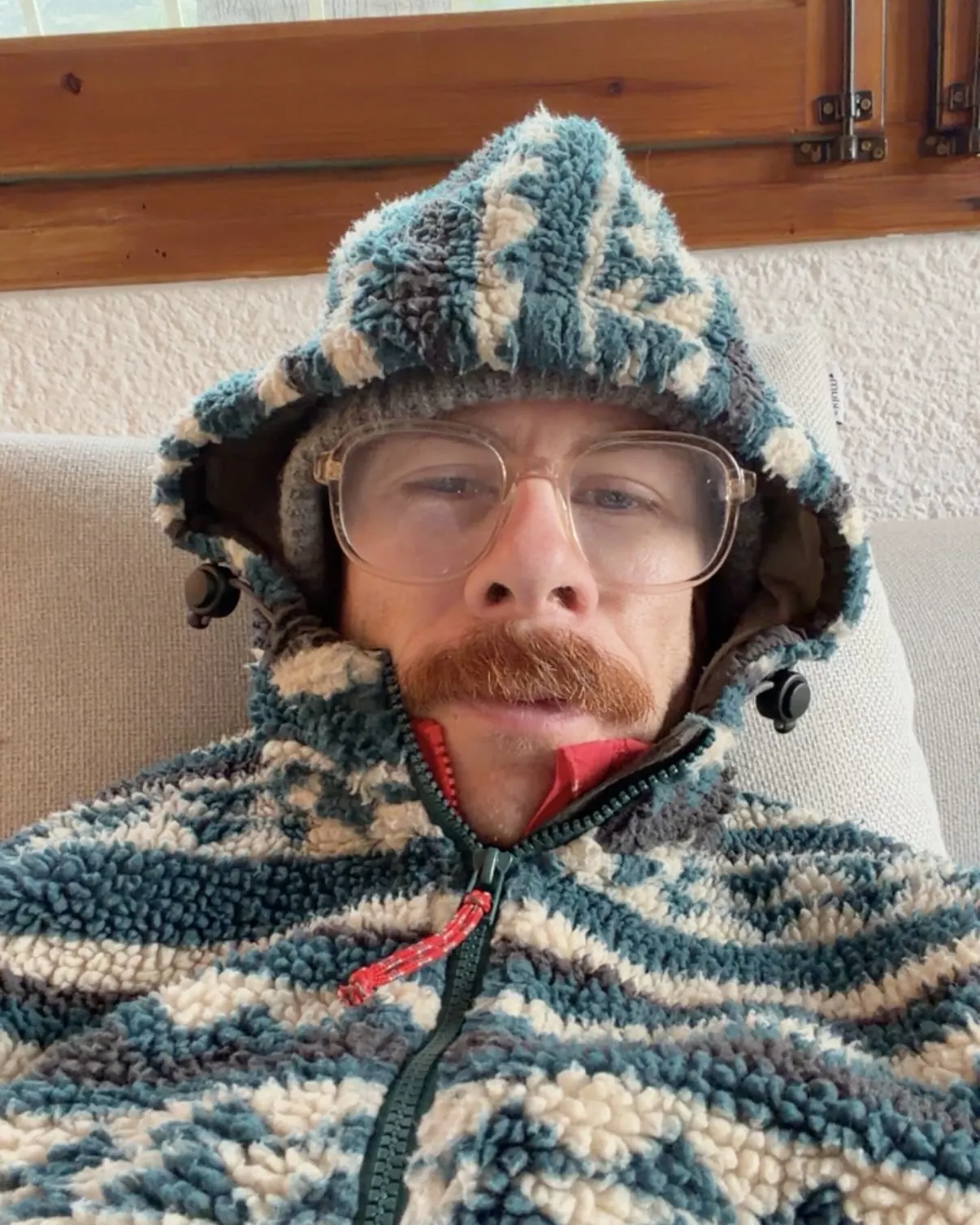
I’m writing this wrapped in a blanket on the sofa, with two jumpers on and hot honey and lemon and a resting HR that’s about 10 beats higher than it should be. The flu has parked itself firmly in my chest and throat, my bike is hangin quietly on the bike rack with the new wheels from our new partner that I cant put on yet, and Intervals.icu is probably drafting my decline in fitness email as we speak.
And you know what?
It’s okay.
Not “okay, as long as I make it up later”, that really doesn’t mean much these days in our world. Just… okay to be ill. Okay to stop. Okay to do nothing that even remotely resembles training for a little while. We are not machines.
For a lot of us who ride, that’s a hard truth to swallow. We’re very good at pushing. Very bad at pausing.
The myth of the disappearing fitness
The first story that shows up the minute we get sick is simple and brutal:
“I’m going to lose everything.” and yeah I am a little bummed out, I had just finished my last training block with the highest FTP I have had and I was planning to go out and have fun, but there will be a video and write up on that soon.
All those intervals, those winter base kilometres, those long Sunday rides, your brain tells you they’ll evaporate in a few days on the sofa. Cue anxiety, guilt, and that itch to “just spin the legs out” even when your body is clearly in crisis mode.
But physiology is kinder than our perfectionism.
A few days off does not delete your fitness.
A week off barely dents it.
Even two weeks off is mostly a temporary drop in sharpness, not a total reset.
Aerobic fitness is built over months and years, not days. The adaptations you’ve earned — stronger heart, more efficient muscles, better mitochondrial function — don’t vanish because you caught the flu and watched Netflix instead of riding.
Yes, you might feel rusty when you come back. Your heart rate will feel jumpy, your legs a bit wooden, your breathing less smooth. That’s not loss of fitness; that’s loss of “feel.” And “feel” comes back very quickly once you’re actually healthy.
The irony? The fastest way to genuinely damage your fitness is to ignore illness, rush back, and dig yourself into a hole you can’t ride out of.
You’re not a robot. You’re a human.
Cycling culture quietly worships invincibility.
We celebrate riders who “push through”, who “ride through the pain”, who never miss a session. That works in a race with a finish line in sight. It doesn’t work as a permanent way of living in a human body that has an immune system, hormones, stress, and a limited energy budget.
There’s this unspoken expectation that if you’re “serious” about your riding, you’ll find a way. Early starts. Late-night trainer sessions. Riding in the rain. Training “around” a cold.
But being ill is your body saying: “I am already finding a way. I’m busy. Please stop adding to my to‑do list.”
When you get the flu, your system diverts energy from performance to repair. Your body isn’t lazy. It’s prioritising survival, like it should. Cough, fever, fatigue — they’re not signs of weakness. They’re signs the system is doing exactly what it’s designed to do.
You’re not failing your training plan. You’re being human. That’s allowed.
Trust the process (including the ugly bits)
We love the phrase “trust the process” when it means “stick to the plan, even if it’s boring”.
But part of the process is not training. Part of progression is stepping away when your body is waving a white flag.
If we zoom out, a season — or a year — is not a perfect, uninterrupted block of green ticks on a calendar. It’s a messy line: big weeks, quiet weeks, races, crashes, holidays, stress at work, family stuff, surprise colds and, yes, annoying flu.
Here’s the thing: the riders who progress long term aren’t the ones who never get sick. They’re the ones who:
Don’t panic when they do.
Don’t force their way back too soon.
Don’t equate rest with weakness.
Trusting the process looks like this:
Accepting that a week off in December won’t ruin your whole season.
Letting winter base take a tiny detour so your immune system can do its job.
Believing that consistency over months beats martyrdom over days.
It’s a long game. Acting like every single week is make-or-break is the fastest way to burn out mentally and physically.
The temptation to “test the legs”
You start to feel a little better.
The fever breaks. Your nose is less of a disaster zone. You sleep through the night without coughing up a lung. The group chat is buzzing about the weekend ride and a small, persuasive voice in your head says:
“Maybe I’ll just do an easy hour. Just to see how I feel.”
That “easy hour” is where a lot of riders get trapped.
Because it rarely stays easy. You feel okay, so you push a bit. Someone sprints for a sign. There’s a hill. Your ego spots a wheel and decides today is the perfect day to protect your fragile sense of fitness.
Two hours later, you’re empty. That night, your symptoms come roaring back, often worse than before. Congratulations: you’ve just extended your recovery by another week or more.
Coming back from illness is not about passing a test on the bike. It’s about respecting that healing continues well beyond the moment you feel “not awful.”
A simple rule of thumb:
If you still have symptoms below the neck (chest, lungs, deep fatigue, aches), stay off the bike.
When symptoms are mostly gone, start with genuinely easy, short spins.
If your heart rate is weirdly high, your breathing feels rough, or you feel heavy and flat — turn around, go home, try again another day.
That’s not weakness. That’s discipline.
Your bike will wait. Your body can’t.
We talk a lot about “keeping commitments.” But sometimes the commitment is to the part of the plan that doesn’t look heroic on Strava.
Your bike will not get offended if you don’t ride it for a week.
Your followers won’t stage an intervention because your upload graph went quiet.
Sponsors, coaches, future you — none of them actually benefit from you forcing yourself through junk kilometres while your immune system is on fire. Nobody remembers the Tuesday you heroically rode with a 38°C fever. They will remember the season derailed by an illness you never let yourself fully recover from.
Meanwhile, your body is here, now. It’s the same body you’re going to ask to:
Sit at threshold for 20 minutes.
Survive back‑to‑back race days.
Get you over mountains in summer heat.
You can’t treat it like a rental car in December and expect it to be a Formula 1 chassis in July.
Being kind to your body when you’re ill is not indulgent. It’s maintenance. It’s paying into the same account you’re planning to withdraw from later.
Rest is still training (just in disguise)
The hardest reframe for driven riders is this:
Rest is not the opposite of training. It’s a phase of training.
When you’re ill, your “session” for the day might be:
8–10 hours of sleep.
Staying hydrated.
Actually eating food, not just coffee and guilt.
Saying no to rides, even if the weather is finally good.
Letting go of the urge to “make it productive” with extra work or chores.
If you need a training‑brain hack, log it. Call it “Recovery – unstructured” or “Immune system block”. Smile at the empty TSS. Remember that not every adaptation you care about is visible on a chart.
Mentally, it’s also a chance to zoom out:
Reconnect with why you ride in the first place.
Notice how much of your identity feels chained to “being fit”.
Ask yourself whether your relationship with training feels like partnership or punishment.
Illness has a rude way of showing you how tightly you’re gripping control. Sometimes the best thing you can train is your ability to let go when life insists.
You don’t have to earn your place in the peloton
One of the quiet fears behind “I can’t miss training” is social: the fear of being dropped, left behind, or quietly downgraded in other people’s minds.
We worry that missing a week means:
“I won’t be able to hang on.”
“They’ll think I’m slacking.”
“I’ll lose my place in the group.”
But here’s the reality: everyone gets ill. Everyone disappears for a bit. Everyone has off‑seasons, stress, and stuff that doesn’t fit neatly into their training spreadsheet.
You’re not the odd one out; you’re literally the norm. The riders who really understand the sport long-term respect illness. They’ve been there. Most of them have a story that starts with “I once trained through a virus and it cost me months…”
You don’t have to earn your right to show up to the group ride by never getting sick. You just have to be a decent human, ride your bike, and look after yourself.
So, if you’re ill right now…
If you’re reading this with a sore throat, a box of tissues nearby, and a bike staring at you from the hallway, here’s what I’d tell you (and what I’m telling myself):
Your fitness has not evaporated.
A week or two of proper rest will not ruin your year.
Forcing your way back too soon can ruin your next few months.
You are not a robot. You’re a human, and humans get ill.
You don’t need to “deserve” a break. Being sick is the reason.
Trust the process — including the messy bits where the process looks like doing nothing.
You will ride again. You will be fit again. You will hit numbers again. The road, the trails, the long climbs and fast descents — they’re not going anywhere.
For now, it’s okay to lie low, drink the tea, binge the series, and let your immune system have the spotlight.
The bike will wait.