One Bike or Two? Why Cyclists Overcomplicate the Seasons
Every year, as autumn rolls in and the mornings start to bite, the same conversation starts echoing around group rides and online forums:
“It’s nearly winter — time to get the winter bike out.”
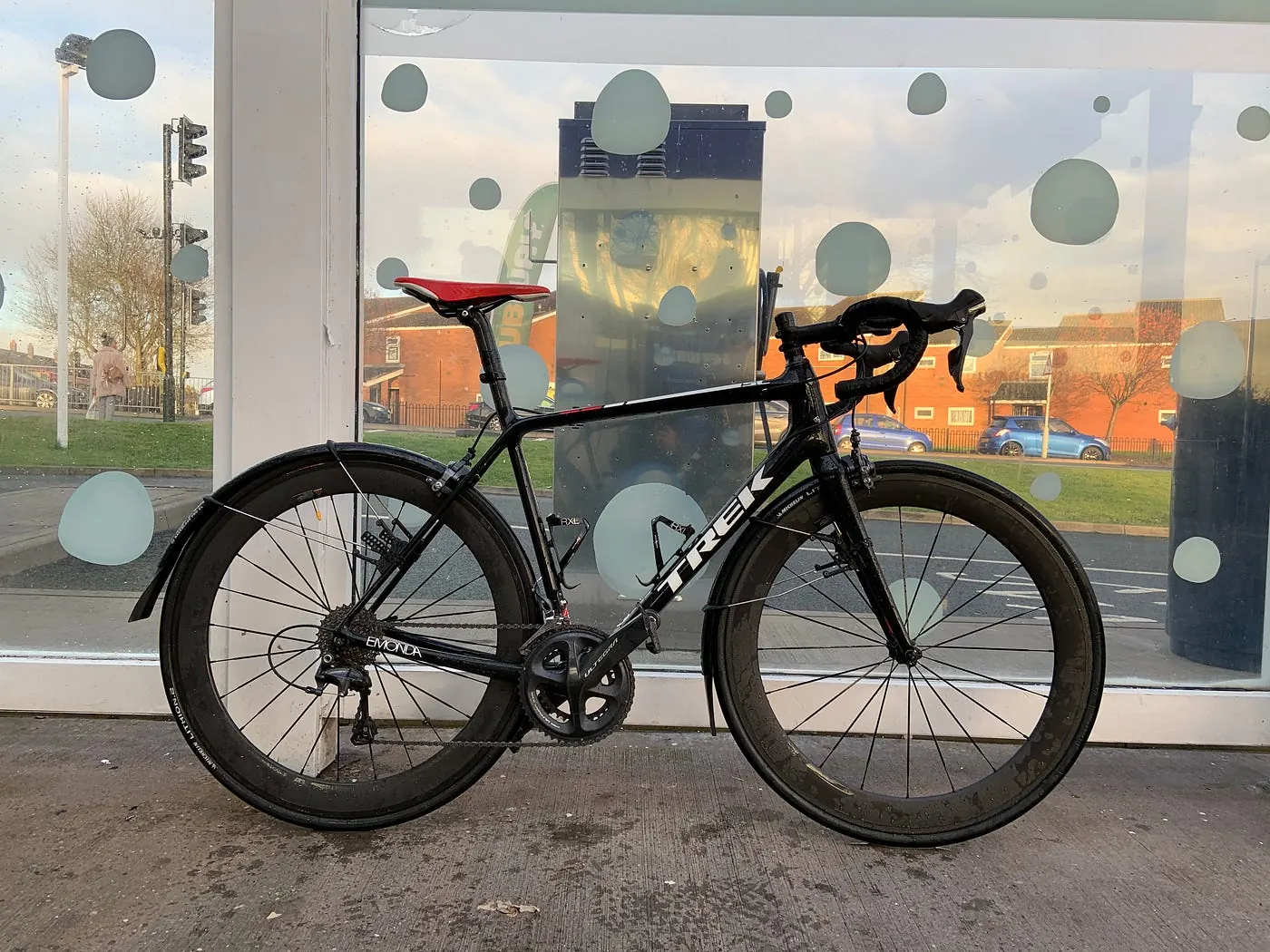
It’s almost a ritual. The “good” carbon bike gets cleaned, polished, and tucked away like a sports car in storage, and out comes its heavier, slightly scruffier sibling: the so-called winter bike. Usually steel or alloy, with fenders, cheaper wheels, and components that no one minds sacrificing to the salt gods.
And for decades, that made perfect sense.
But in 2025 — when drivetrains are sealed tighter than a submarine, ceramic coatings exist, and lubes last longer than your free trial of the subscription your trying out — do we really need two bikes?
Or have we just overcomplicated something that could be simple?
Where the Winter Bike Came From
The idea of a “winter bike” was born out of necessity. Go back a few decades, and winter riding really was mechanical carnage. Steel frames rusted, cables seized, rims wore out after one grimy December, and replacing parts wasn’t cheap. Having a dedicated beater bike was practical — you saved your nice one from ruin.
But fast-forward to today, and bikes have evolved faster than our mindsets.
Modern materials — carbon, titanium, treated aluminum — shrug off bad weather. Hydraulics don’t seize, electronic shifting is sealed and reliable, and drivetrains can handle a bit of muck if you show them some love now and then.
Yet somehow, the tradition stuck. Many of us still feel this internal obligation to own two (or three) bikes: one for summer, one for winter, one “for gravel just in case.” It’s almost like an identity badge.
Owning a winter bike has become more of a cultural norm than a mechanical necessity.
One Bike, Well-Loved
Here’s a radical thought: one well-maintained bike can carry you through every season.
If you take care of it — wash it regularly, replace parts when they wear, and don’t let grime build up — it’ll handle anything. Rain, salt, frost, mud — none of it is fatal if you keep up with simple, consistent maintenance.
Good maintenance doesn’t require a mechanic’s degree either. It’s ten minutes of care for hours of smooth riding.
Try this:
Hose it down after grimy rides (no pressure washers aimed at bearings, please).
Use a good degreaser once a week.
Dry it, relube the chain, and you’re done.
Wax-based lubes last longer in bad weather and keep your drivetrain cleaner.
Swap out brake pads and check bearings once in a while.
That’s the whole secret.
One bike, well-loved, can be better than two that only get half the attention.
The Hidden Cost of “Two Bikes”
Now, before someone says, “But I like having options!” — fair. Having multiple bikes can be fun. But let’s talk about what it actually costs — not just in money, but in headspace.
Two bikes means two sets of parts, two maintenance schedules, two chains to wear out, and two sets of wheels that somehow always need truing. It means one bike is always slightly neglected, gathering dust while the other takes the spotlight.
And if we’re honest, it can become an excuse — a way to buy more stuff instead of riding more.
There’s a quiet joy in simplicity. One bike that’s dialed in, clean, and reliable every time you roll out the door — it becomes an extension of you. You know every sound, every quirk, every perfect gear change. There’s no mental friction about which bike to take today — you just ride.
Cycling, at its core, isn’t about collecting gear. It’s about movement, about moments. The more we strip away, the more we find that essence again.
The Psychology Behind It
Let’s admit something most of us secretly know: the “winter bike” is sometimes just an excuse to buy another toy.
And honestly? There’s nothing wrong with that. We all love new gear. A new bike feels like a fresh chapter — motivation on wheels. But that’s desire, not need.
Marketing has done a brilliant job convincing us that bikes must be specialized. One for racing, one for endurance, one for gravel, one for winter. We tell ourselves it’s logical — different tools for different jobs. But sometimes, it’s just the consumer version of playing dress-up.
That “winter bike” justification makes us feel responsible — like we’re being sensible adults protecting our investment. In reality, it’s often just indulgence wrapped in logic.
When Two Bikes Do Make Sense
Of course, there are valid cases for having two. If you commute daily in rain and want a setup that lives by the door, sure. If you race and have a backup in case of mechanical issues, that’s practical.
Or maybe you genuinely just love tinkering — having a second bike to experiment with setups, gearing, or tech.
That’s all completely fine.
The point isn’t to shame anyone for owning multiple bikes — it’s to question why we feel like we need them.
Because in most cases, one good bike, looked after well, will do the job beautifully.
The Simple Joy of Riding What You’ve Got
There’s something refreshing about paring things back. About focusing less on gear, and more on getting out the door.
The bike you already own is capable of more than you think. It doesn’t care if it’s raining or cold or if the roads are dusty. It just wants to be ridden.
The more time you spend maintaining a “relationship” with one bike, the more rewarding the experience becomes. You learn its limits, its personality, how it feels under stress. You trust it — and that trust makes you a better rider.
Cycling culture has a habit of making everything more complicated — training zones, gear ratios, tire widths, marginal gains. But the best moments on a bike are still the simplest ones: that early morning quiet, the hum of tires on tarmac, the feeling that for a couple of hours, life is straightforward again.
So, One Bike or Two?
If you love bikes and can afford more than one — go for it. No judgment here. But don’t fall for the myth that you need a “winter bike” to be a proper cyclist.
You don’t.
What you need is consistency, care, and a little mechanical empathy.
Ride what you have, maintain it well, and you’ll find that one bike can handle every season, every mood, and every excuse not to ride.
Because the truth is, cycling doesn’t get better by adding more bikes — it gets better by riding the one you already love.