The comments under the Sanremo crash tell you everything.
There was a crash at Milan-San Remo. Riders went down. Bikes tangled. The peloton split for a moment and then moved on, as pelotons do. It was the kind of incident that happens in racing, that has always happened in racing, that will keep happening in racing for as long as people ride bikes at speed in groups.
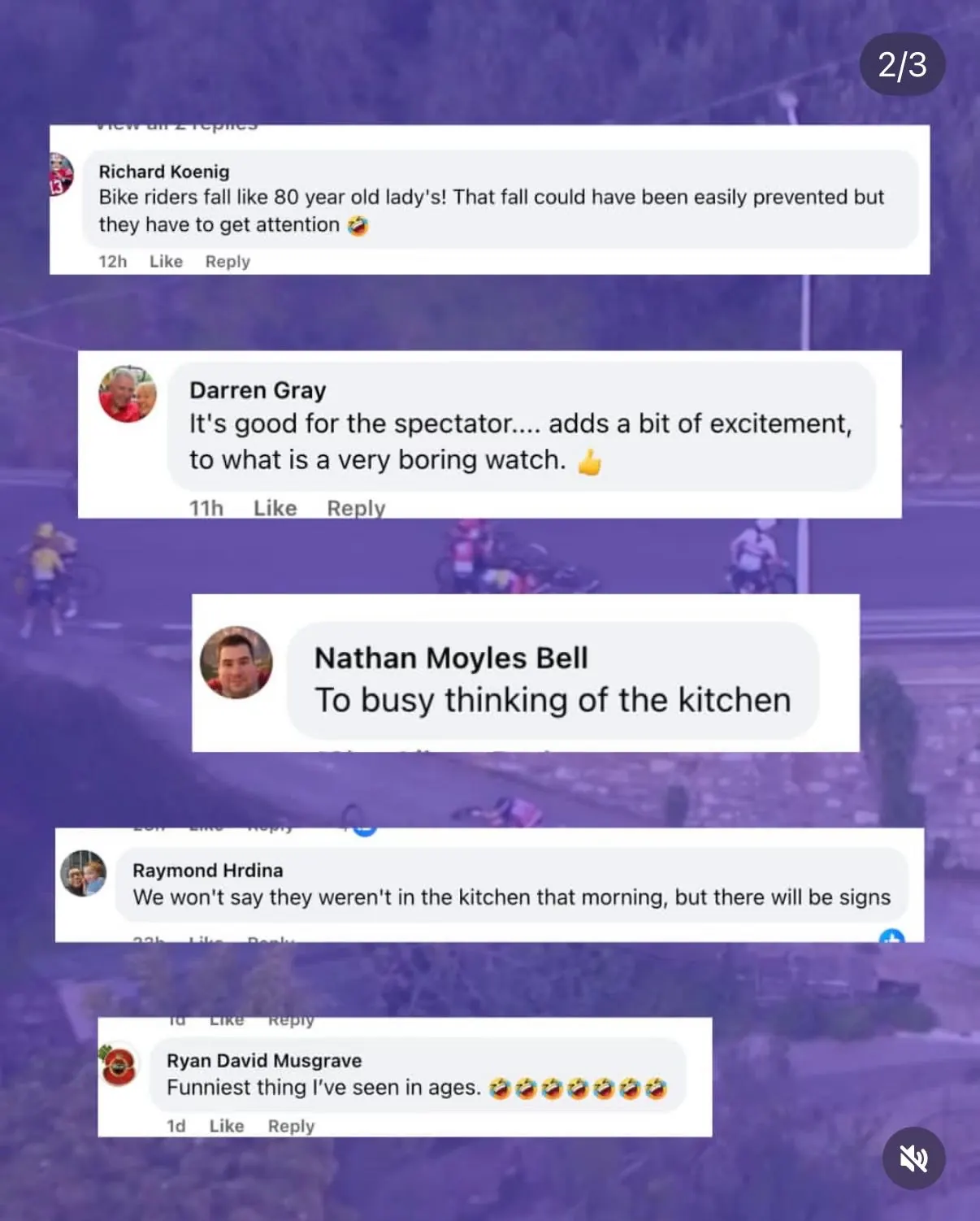
What followed in the comments was not about cycling.
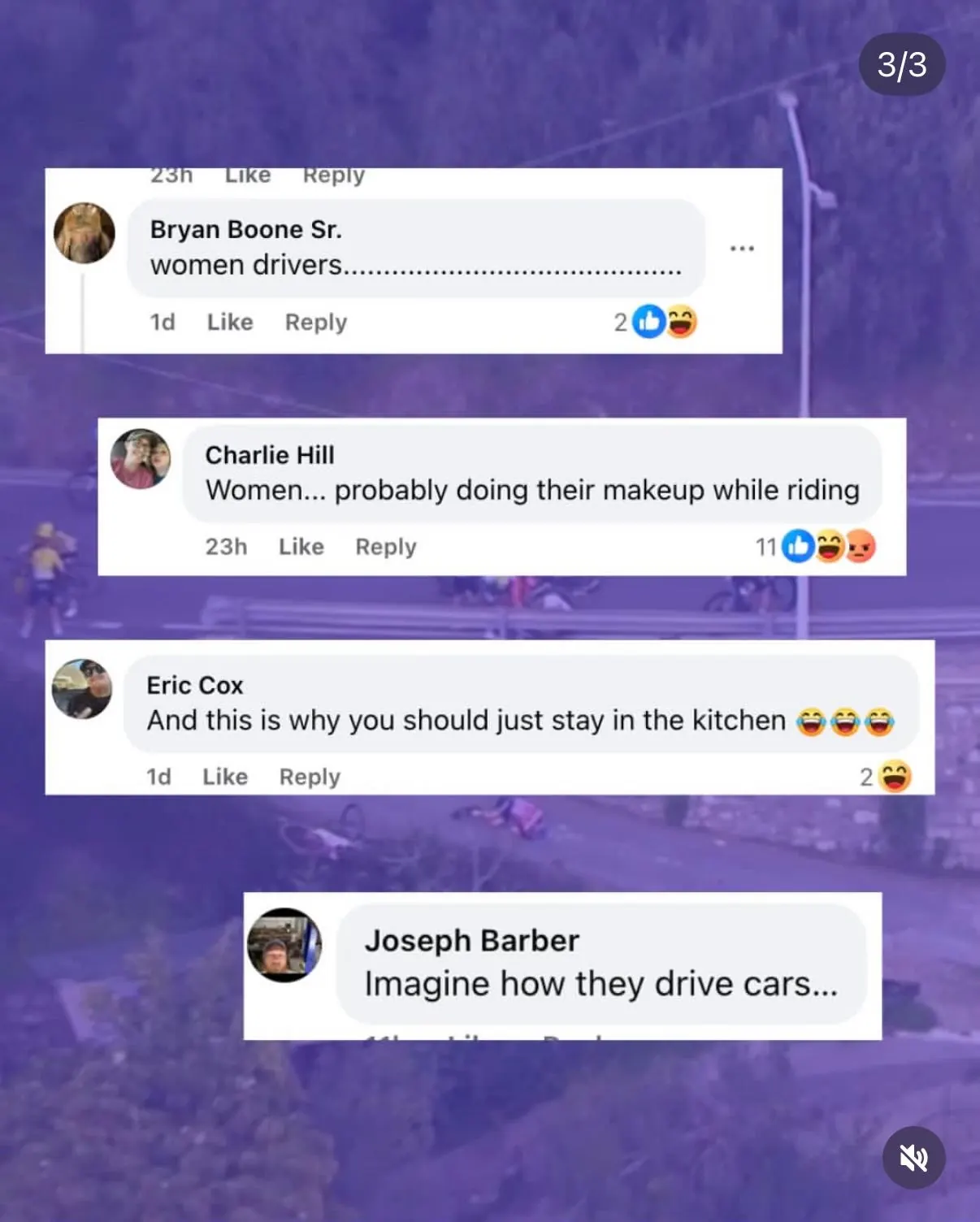
“To busy thinking of the kitchen.” “Women... probably doing their makeup while riding.” “And this is why you should just stay in the kitchen.” “Imagine how they drive cars.” “It’s good for the spectator... adds a bit of excitement, to what is a very boring watch.”
These are not outliers pulled from the darkest corners of the internet. These are publicly visible comments, sitting under a post about a crash at one of cycling’s most prestigious races, written by men using their real names and profile pictures. They attracted likes. They attracted laughing emojis. Nobody around them seemed particularly bothered.
This is where we are.
Women’s cycling has never been more visible. The races are bigger, the fields are deeper, the coverage is better. La Primavera Women’s edition attracts serious riders, serious competition, and serious investment. The sport has made genuine, measurable progress on that front.
And yet the culture that surrounds cycling has not kept pace with the sport itself. The visibility of women’s racing has grown. The contempt directed at it, it turns out, has simply found new platforms.
This is not a new problem. It is not a social media problem, though social media has made it louder and more legible. The attitude that women on bikes are comic, incompetent, or simply out of place has existed in this sport for as long as women have been trying to race in it. For most of that history it was expressed in closed rooms, in race committees that refused entry, in broadcasters who wouldn’t cover the events, in prize money that was a fraction of the men’s equivalent. The kitchen jokes are just the same sentiment, wearing different clothes.
What is worth examining is what these comments actually reveal about how a subset of cycling’s audience relates to the sport. Because the argument isn’t really about crashes. Crashes are the excuse. The argument is about legitimacy: whether women belong in professional racing at all, whether their competition counts, whether their crashes are worthy of the same response you’d give to men hitting the tarmac at 60 kilometres per hour.
When a men’s peloton crashes, no one questions whether men should be on bikes. The crash is analysed, the riders are assessed, the race moves on. The incident is read as part of the sport. When a women’s peloton crashes, a portion of the audience reads it as confirmation of a prior belief they already held. The crash is not an event. It is evidence.
That is a fundamentally different relationship with the same sport. And it is worth naming clearly.
The feistycycling account that surfaced these comments added the caption: “We’ve come a long way but the keyboard warriors are still alive and well.” That framing is generous. It treats this as a residual problem, a tail-end phenomenon, the last stragglers of a losing battle.
I am not sure that is right. I think the visibility of women’s cycling has created a backlash, not just revealed a remnant. The more women’s racing is covered, the more it occupies space that some people in cycling did not want it to occupy, the louder this becomes. Progress and pushback are running alongside each other. They are not in sequence.
The sport is not going to resolve this by growing. It will not be solved by better races or bigger prize funds alone, though both matter. The culture of cycling’s audience is a separate problem from the structure of cycling’s races. Both need attention. Right now, only one of them is getting it.
The riders who crashed at Sanremo got back on their bikes. Some of them finished the race. They will line up again at the next one. They have always had to be more determined than their male counterparts, not because of any physical difference, but because the sport has spent decades making it harder to simply belong in it.
The least the rest of us can do is see that clearly.